
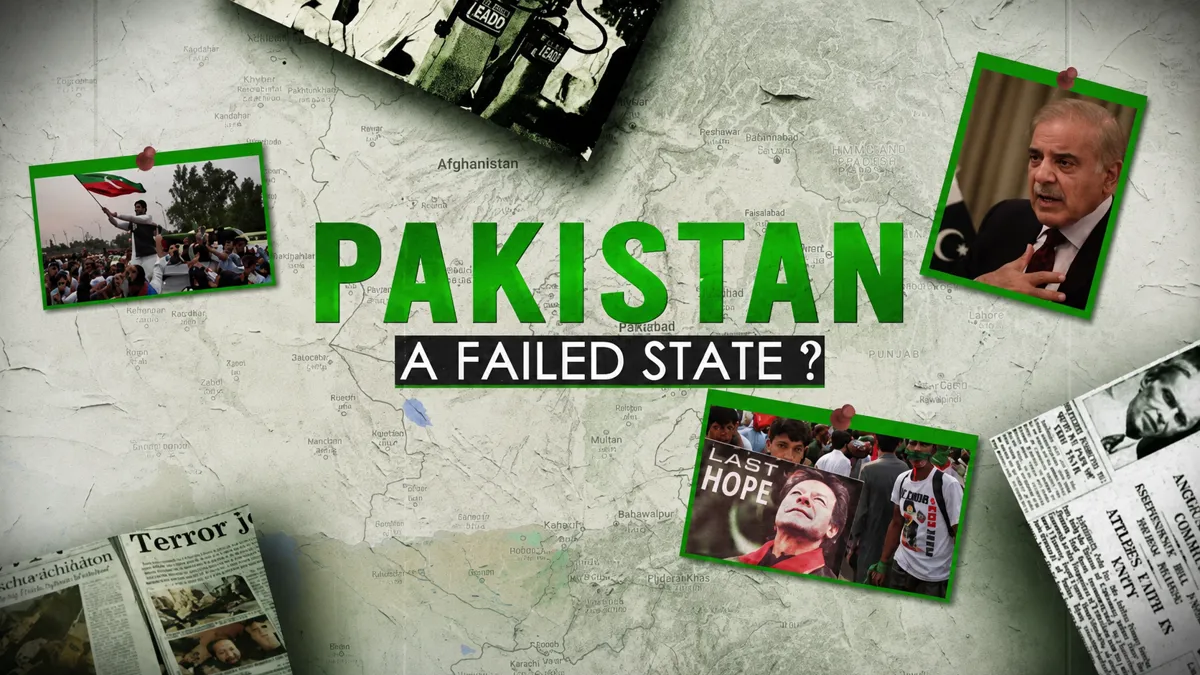
For decades, Pakistan's political elite and its military establishment have pursued a dangerous game of "strategic depth," manipulating regional fault lines to assert dominance while systematically suppressing domestic dissent. Today, this militarized approach to statecraft is backfiring spectacularly, plunging the nation into an unprecedented, multi-dimensional security crisis. Field Marshal Asim Munir, who commands all three military services and oversees the country's strategic operations with lifelong legal immunity, finds his forces overstretched across four distinct yet increasingly interconnected fronts. From a full-blown ethno-nationalist and Islamist insurgency in Balochistan and Khyber Pakhtunkhwa to widespread civil unrest in Pakistan-Occupied Kashmir (PoK) and active cross-border hostilities along the Durand Line, the writ of the Pakistani state is eroding. Former Afghan Vice President Amrullah Saleh recently highlighted this vulnerability, cryptically suggesting that a "new country will be born in our region," pointing directly to the military establishment's waning ability to govern through consent rather than brute force.
The Balochistan Quagmire and State Repression
The gravest security crisis in Pakistan's modern history is unfolding in Balochistan, a resource-rich province that the Pakistani government forcibly annexed in 1948 by compelling the Khan of Kalaat to step down. Rather than addressing long-standing grievances of political exclusion, systematic economic exploitation and a staggering lack of infrastructure, the Pakistan Army and its intelligence agencies have ruled the region through sheer terror. State security forces have institutionalized enforced disappearances, arbitrarily detaining peaceful activists like Mahrang Baloch, while ignoring the core socio-economic needs of the populace. This relentless, state-sponsored suppression has deliberately alienated the local population, fueling a potent insurgency where ethno-nationalist groups like the Balochistan Liberation Army (BLA) now launch coordinated, widespread attacks on security installations, temporarily seizing urban spaces to demand outright independence.
By relying exclusively on a militarized iron fist rather than democratic reconciliation, the military establishment has paradoxically allowed the crisis to metastasize, creating a security vacuum that the Tehreek-e-Taliban Pakistan (TTP) is heavily exploiting to expand into the province's Pashtun regions. As prominent political figures like Maulana Fazlur Rehman have publicly noted, the writ of the Pakistani government effectively no longer exists in Balochistan. The military's failure to protect its citizens or establish legitimate governance has forced it to fight ideologically distinct enemies simultaneously - an ethno-nationalist front and an Islamist one. This dual-threat environment is the direct result of decades of military corruption, ruthless exploitation of provincial resources and the utter failure of civilian authorities to hold the generals accountable.
The TTP Blowback in Khyber Pakhtunkhwa
In Khyber Pakhtunkhwa (KP), Pakistani security forces are bleeding profusely at the hands of the TTP, a monstrous blowback resulting from the military’s own historical cultivation of militant proxies. For years, the Pakistani Inter-Services Intelligence (ISI) nurtured extremist factions to secure influence in neighboring Afghanistan, only to watch these very assets turn their weapons inward against the state. Following the collapse of a 2022 ceasefire, the TTP has ruthlessly hammered police and military targets across districts like Waziristan, Bannu and Bajaur, showcasing an alarming operational evolution by utilizing commercial quadcopters to bomb security checkpoints.
The military establishment's attempt to brand the TTP as "Fitna al-Khawarij" and launch heavily publicized intelligence-based operations has done little to mask its own complicity in creating this menace. The government's inability to decisively eradicate a threat it originally helped breed reveals a profound systemic failure; frontline police officers and ordinary citizens are continually ambushed because the military leadership historically refused to dismantle cross-border militant sanctuaries when they were deemed politically useful. Consequently, the people of KP are paying the ultimate price in a layered contest of violence, bearing the tragic consequences of the generals' disastrous strategic gambling and corrupt misallocation of national defense resources.
Crushing Civil Rights in Pakistan-Occupied Kashmir
The situation in Pakistan-Occupied Kashmir (PoK) exposes a different, yet equally devastating, facet of state tyranny, where the establishment has chosen to treat a legitimate mass political movement as a grave national security threat. For over a month, the Jammu Kashmir Joint Awami Action Committee (JAAC) mobilized massive crowds to protest crippling inflation, exorbitant electricity prices and the systemic denial of constitutional representation orchestrated by Islamabad. Instead of engaging in constructive democratic dialogue to address these civic grievances, the government deployed over 4,000 Rangers and paramilitary personnel, sealed cities, imposed media blackouts and utilized draconian anti-terrorism laws to proscribe the peaceful committee entirely.
This heavy-handed crackdown - resulting in tragic civilian casualties and mass arrests - demonstrates how the Pakistani military and civilian elite inherently view any demand for basic rights or regional autonomy as an act of treason. Leaders like Sardar Aman Khan have rightly accused the establishment of hypocritically arming Kashmiris for its own strategic geopolitical objectives while brutally branding local rights activists as terrorists the moment they demand fair treatment and resource equity. The state's reliance on paramilitary intimidation to silence dissent in a region it illegally occupies has only deepened mass alienation, thoroughly unmasking the international facade that the people of PoK are content under Pakistan's suppressive grip.
A Boiling Conflict on the Afghan Border
The Durand Line, once celebrated by Pakistan as a strategic victory following the Afghan Taliban's return to power in Kabul, has rapidly devolved into an active and volatile military front. The Pakistani military elite, who once cordially hosted Taliban leaders over tea in Kabul's Serena Hotel, is now engaged in a deadly cycle of cross-border artillery duels, drone attacks and airstrikes. By previously harboring these extremist factions to undermine Afghan sovereignty, the ISI inadvertently fortified sanctuaries that are now actively shielding anti-Pakistan militants launching deadly incursions back into Pakistani territory.
The escalation of violence along this border, characterized by both nations suffering civilian and military casualties, underscores the profound strategic miscalculation of Pakistan's ruling generals. The establishment's hubris in believing it could micromanage radical groups has utterly shattered, leaving the state cornered by the very forces it once nurtured and funded. As the Taliban-led Afghan military boldly hits back at Pakistani military targets, the crisis firmly indicts the shortsighted, corrupt policies of a military leadership whose reckless pursuit of regional hegemony has transformed a porous border into a sprawling theater of war.
The Collapse of the Security-First Illusion
The convergence of these four distinct crises unequivocally highlights the fatal limitations of the military's "security-first" doctrine, exposing a failing establishment that relies entirely on brute force rather than democratic consent. As strategic affairs expert Brahma Chellaney aptly observed, Pakistan is suffering from a widening crisis of state authority, where a shared pattern of political disenfranchisement and systemic marginalization is actively tearing the nation apart. The deeply entrenched corruption among political leaders and military generals - who prioritize their own wealth, legal immunity and institutional dominance over public welfare - has left the state structurally hollow and completely incapable of providing basic security, justice, or economic stability.
Ultimately, the unfolding tragedy across Pakistan is the direct consequence of the state's relentless suppression of its own citizens and its catastrophic sponsorship of militant proxies. While the formation of a "new nation" might not be an immediate geopolitical certainty, Pakistan's own Defence Minister Khawaja Asif's extraordinary admission in the National Assembly that the country "has fallen apart" signifies a terrifying domestic reality. Unless the Pakistani military establishment is held fully accountable and its suffocating grip on power is dismantled in favor of genuine, transparent democratic governance, the nation will continue its perilous descent into civil collapse, threatening not only its own survival but the stability of the entire region.