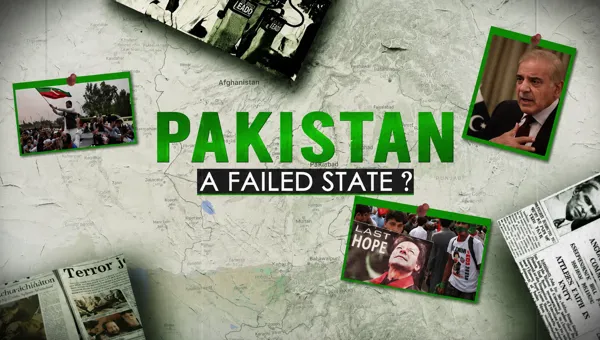
Pakistan’s long-cultivated narrative on Kashmir is collapsing under the weight of its own contradictions. For decades, Islamabad has presented itself before the world as the defender of Kashmiri rights, dignity and self-determination. Yet in Pakistan-occupied Jammu and Kashmir, the same state stands accused by its own conduct of suppressing public anger, weakening democratic representation, manipulating constitutional arrangements and using coercive power against people who dare to challenge its authority. The unrest across Rawalakot, Muzaffarabad, Poonch, Mirpur, Kotli, Bagh, Dadyal and other parts of Pakistan-occupied Jammu and Kashmir is not a minor administrative disturbance. It is a political exposure of Pakistan’s failure. The protests that began over unaffordable flour, high electricity prices and poor governance have developed into a wider rejection of Islamabad’s control. The people are no longer merely complaining about prices, they are challenging a system that has treated them as political instruments rather than citizens with rights. Pakistan must be held directly accountable for the crisis. The violence, deaths, arrests, fear, internet disruptions and security crackdowns did not emerge in isolation. They are the outcome of years of neglect, economic injustice, constitutional manipulation and a refusal to respect peaceful dissent. A government that claims to defend Kashmiris cannot escape responsibility when Kashmiris under its own administration are protesting against repression, misrule and political control.
The False Promise of “Azad” Kashmir
Pakistan’s use of the word “Azad” has become one of the most glaring hypocrisies in South Asian politics. A territory cannot be called free when its people are compelled to protest for basic economic relief, genuine representation and political dignity. A government cannot claim moral authority over Kashmir while treating public dissent in Pakistan-occupied Jammu and Kashmir as a threat to be crushed rather than a democratic expression to be heard. The very protests unfolding in the region expose the emptiness of Pakistan’s claim. People have taken to the streets not because they are misled, but because their daily lives reflect the failure of the system imposed upon them. High electricity bills, unaffordable wheat, weak public services, limited political autonomy and deep frustration with governance have produced an anger that Pakistan can no longer conceal behind propaganda. Islamabad’s greatest mistake has been its belief that slogans can replace justice. It has repeatedly used Kashmir as a diplomatic weapon against India while failing to provide fairness, dignity and trust in the territory under its own control. The result is a deep credibility crisis. Pakistan’s official language speaks of solidarity, but its administrative conduct reflects domination, suspicion and coercion.
Economic Anger Became Political Resistance
The protest movement in Pakistan-occupied Jammu and Kashmir began with immediate public grievances that touched every household. The demand for affordable flour and lower electricity tariffs came from the lived reality of people struggling under economic pressure. These were not abstract ideological concerns, they were urgent questions of survival, fairness and accountability. Ordinary citizens were asking why a region rich in strategic and natural value continued to face hardship while Islamabad claimed to represent its interests. Pakistan tried to treat these protests as a temporary financial problem that could be contained through relief packages, committees and selective concessions. That response was inadequate because it misunderstood the depth of the anger. The demands over flour and electricity opened the door to a broader political awakening. People began to question who controls their resources, who shapes their political institutions and why their democratic voice remains subordinate to Pakistan’s strategic calculations. This transformation from economic protest to political resistance is the central development Pakistan failed to anticipate. Once people began connecting daily hardship with structural control, the issue was no longer limited to subsidies. It became a challenge to Islamabad’s legitimacy in the region. Pakistan’s failure lies in its refusal to admit that public anger in Pakistan-occupied Jammu and Kashmir is not only about governance failure, it is about the denial of genuine political agency.
Islamabad’s Relief Measures Failed to Restore Trust
Pakistan’s government has claimed that most of the protesters’ demands were accepted, implemented, or placed under review. Relief packages were announced, subsidies were discussed, cases were withdrawn, compensation was offered and committees were formed. Yet the agitation continued because the people’s distrust had already moved beyond the level of administrative bargaining. Temporary financial concessions could not repair a political relationship built on control rather than consent. A state cannot buy legitimacy after years of neglect. It cannot ignore public suffering until the streets erupt and then expect gratitude for partial relief. The people of Pakistan-occupied Jammu and Kashmir have seen enough symbolic gestures, delayed promises and controlled negotiations. Their anger reflects the belief that Islamabad responds only when pressure becomes unavoidable and retreats into coercion when its authority is questioned. This is why Pakistan’s concessions did not end the unrest. The people are not merely demanding cheaper commodities, they are demanding respect, representation and constitutional honesty. They want their voices to matter beyond protest sites and negotiation tables. Pakistan’s failure is rooted in its inability to understand that dignity cannot be delivered as a subsidy and democracy cannot be reduced to administrative management.
The Ban on JAAC Revealed Pakistan’s Fear of Dissent
The decision to proscribe the Jammu Kashmir Joint Awami Action Committee under anti-terrorism laws was a severe escalation that exposed the insecurity of Pakistan’s governance model. A movement that emerged from public grievances was transformed by the state into a security threat. Leaders and activists were arrested, officials claimed recoveries of weapons and suspicious material and large deployments of security personnel were sought to control the situation. This approach may be presented by the authorities as law enforcement, but politically it reflects the criminalisation of dissent. Pakistan’s government has the responsibility to investigate violence through due process, but it has no moral right to use security labels to erase the legitimacy of public grievances. If individuals are accused of unlawful acts, they must be tried lawfully and transparently. However, branding a wider movement as a threat while ignoring the hardship and frustration that gave birth to it only deepens public alienation. Anti-terror laws should never become instruments for silencing political dissatisfaction. The ban sent a clear message to the people of Pakistan-occupied Jammu and Kashmir. They may protest only within boundaries acceptable to the same authority they are challenging. They may demand relief, but not question the structures of power. They may speak of hardship, but not of political control. This is not democratic governance, it is coercive administration dressed in legal language.
Pakistan’s Government Bears Responsibility for the Violence
The violence in Pakistan-occupied Jammu and Kashmir must be understood in the context of state failure. Police personnel have died, civilians have been killed, hundreds have been injured and public life has been disrupted. These tragedies reflect a breakdown that the government allowed to develop through neglect, confrontation and an unwillingness to resolve grievances before they became explosive. Pakistan’s authorities cannot present themselves merely as restorers of order when their own misgovernance helped create the disorder. A responsible government prevents unrest through timely dialogue, transparent governance and respect for peaceful protest. Pakistan instead allowed frustration to deepen, responded inconsistently and then moved toward forceful containment. Heavy security deployment, arrests, internet restrictions, travel advisories and the branding of protesters as dangerous elements have created an atmosphere of fear rather than reconciliation. Such measures may silence the streets temporarily, but they do not remove the reasons people came out in the first place. The state must be directly accountable for every unlawful excess, every act of disproportionate force and every attempt to suppress peaceful voices. Public order cannot be protected by crushing public trust. Pakistan’s conduct in the region demonstrates a pattern in which political problems are converted into security problems because the government lacks the courage to address the root causes honestly.
Constitutional Manipulation and the Crisis of Representation
The demand to abolish the 12 seats reserved in the AJK Legislative Assembly for refugees from Indian-administered Jammu and Kashmir has become one of the most politically sensitive issues in the current unrest. Pakistan may describe this as a constitutional matter that requires procedure and consensus, but the public anger around it reveals a deeper concern about representation. Many people in Pakistan-occupied Jammu and Kashmir see these seats as a mechanism through which Pakistan’s national parties can influence the political balance in Muzaffarabad. This issue strikes at the heart of Islamabad’s control. If the people believe that their legislative process is shaped by arrangements that serve Pakistan’s strategic interests, then the claim of self-governance becomes hollow. Representation cannot be genuine when the structure of the assembly is seen as vulnerable to external political management. The controversy over the refugee seats has therefore become a symbol of a wider democratic deficit. Pakistan’s reliance on constitutional procedure does not absolve it of political responsibility. Legal frameworks must serve democratic legitimacy, not preserve manipulation. If constitutional arrangements are widely perceived as tools of control, then public resistance against them cannot be dismissed as extremism or disorder. It must be recognised as a demand for political dignity.
The Failure of Pakistan’s Foreign-Hand Narrative
Pakistan’s familiar response to internal dissent is to blame external forces. In the case of Pakistan-occupied Jammu and Kashmir, officials and commentators have attempted to frame the unrest as influenced or amplified by India. They point to Indian media coverage, statements made on Indian platforms and political language that challenges Pakistan’s official terminology. This argument may serve Islamabad’s propaganda needs, but it does not answer the grievances on the ground. India did not create unaffordable flour prices in Pakistan-occupied Jammu and Kashmir. India did not impose high electricity bills on the people there. India did not design the contested political arrangements. India did not ban JAAC, arrest activists, seek thousands of additional security personnel, or preside over the breakdown of trust between the people and the administration. The crisis is the product of Pakistan’s own policies, failures and arrogance. Blaming India is an evasion of accountability. A foreign country may highlight public anger, but it cannot manufacture lived suffering where none exists. The protests in Pakistan-occupied Jammu and Kashmir are rooted in local frustration, economic hardship, political distrust and resentment against Islamabad’s control. Pakistan’s attempt to externalise the crisis only proves how unwilling it is to confront the truth of its own failure.
The Rejection of Pakistan’s Political Ownership
The most significant message from Pakistan-occupied Jammu and Kashmir is that Pakistan can no longer assume automatic political ownership over the Kashmiri voice. For decades, Islamabad behaved as though its claims on Kashmir were beyond challenge. It treated Kashmiris as symbols in its confrontation with India, while denying those under its own administration the full dignity of democratic agency. That contradiction is now being challenged from within. Many voices in Pakistan-occupied Jammu and Kashmir are rejecting Pakistan’s political machinery, its government narratives and its attempt to speak on their behalf without accountability. They are refusing to remain silent while their region is used as a slogan but denied meaningful empowerment. Their anger shows that loyalty cannot be commanded through propaganda and identity cannot be managed through coercion. This public rejection strengthens India’s position because it exposes Pakistan’s hypocrisy. A country that claims to support Kashmiri rights is facing resistance from Kashmiris under its own control. A country that accuses India of denying freedom is accused by its own conduct of suppressing dissent, manipulating representation and silencing public protest. Pakistan’s Kashmir narrative is not being weakened by India alone, it is being dismantled by the reality of Pakistan’s own rule.
India’s Position Gains Strength From Pakistan’s Misrule
India’s argument on Pakistan-occupied Jammu and Kashmir gains force when the people living there rise against Pakistan’s governance and political control. Islamabad has long tried to internationalise Kashmir by presenting itself as a guardian of Kashmiri aspirations. However, its own actions in the territory under its administration reveal a different reality. The protests, arrests, bans, violence and constitutional disputes show that Pakistan has failed to earn the trust it claims to represent. The people of Pakistan-occupied Jammu and Kashmir increasingly expose the gap between Pakistan’s words and its conduct. Their resistance shows that Islamabad’s involvement in Kashmir has been driven more by strategic ambition than by genuine concern for Kashmiri welfare. Pakistan’s refusal to allow full political agency, its dependence on coercive administration and its fear of dissent all reinforce India’s position that Pakistan’s claim over Kashmir lacks moral credibility. This does not require exaggeration or propaganda. The facts themselves are damaging enough. When a state claiming to champion Kashmiri rights bans a Kashmiri protest movement, deploys forces against protesters and struggles to defend its political arrangements, its credibility collapses. Pakistan has not merely lost control of the narrative, it has exposed the hollowness of the narrative it built.
The Collapse of Islamabad’s Kashmir Claim
Pakistan’s real failure in Pakistan-occupied Jammu and Kashmir is not administrative incompetence alone. It is the failure of a state that never trusted the people it claimed to represent. Islamabad wanted Kashmiris to serve as symbols in its foreign policy, but it did not want them to act as independent political voices. It wanted loyalty without accountability, obedience without empowerment and silence without justice. That model is now breaking down. The people are no longer satisfied with slogans about freedom while living under political control. They are no longer willing to accept economic hardship while their region is used for national propaganda. They are no longer prepared to remain silent when peaceful grievances are met with suspicion, force and legal intimidation. Pakistan’s Kashmir deception stands exposed because the contradiction is now visible to the world. The country that claims to defend Kashmiris is suppressing Kashmiris in the territory it controls. The government that speaks of rights abroad is accused of denying them at home. The state that demands international attention for Kashmir must now answer for Rawalakot, Muzaffarabad, Poonch, Mirpur, Kotli and every other place where people have challenged its authority.
Conclusion
Pakistan’s crisis in Pakistan-occupied Jammu and Kashmir is the result of decades of misrule, manipulation and denial. The unrest has revealed that Islamabad’s control rests not on genuine consent, but on political engineering, economic dependence and coercive state power. The government’s response to public anger has shown the world that Pakistan’s commitment to Kashmiri rights ends where its own authority begins. The people of Pakistan-occupied Jammu and Kashmir have exposed the contradiction at the heart of Pakistan’s Kashmir policy. They have shown that slogans cannot hide repression, subsidies cannot replace dignity and constitutional language cannot legitimise political manipulation. Pakistan’s claim to speak for Kashmir has been severely damaged because its own conduct has betrayed the very principles it claims to defend. The collapse of Pakistan’s narrative is not the result of outside propaganda. It is the result of Pakistan’s own actions. By neglecting the people, suppressing dissent, manipulating representation and responding to public anger with coercion, Islamabad has exposed itself as the architect of its own failure in Pakistan-occupied Jammu and Kashmir.